
The invitation arrives and, for a moment, you want to say yes.
Then the questions begin. How far away is it? Can you leave easily? What if it happens there?
Before the day has even arrived, you’re working out how to get through it. You might still go. You might even look as though you’re enjoying yourself. But part of your attention stays elsewhere, checking how you feel, watching for the first sign.
Perhaps what you miss most is being able to look forward to something.
Or perhaps your panic doesn’t give you time to prepare. It arrives while you’re doing something ordinary, leaving you shaken and wondering whether you can trust yourself to carry on.
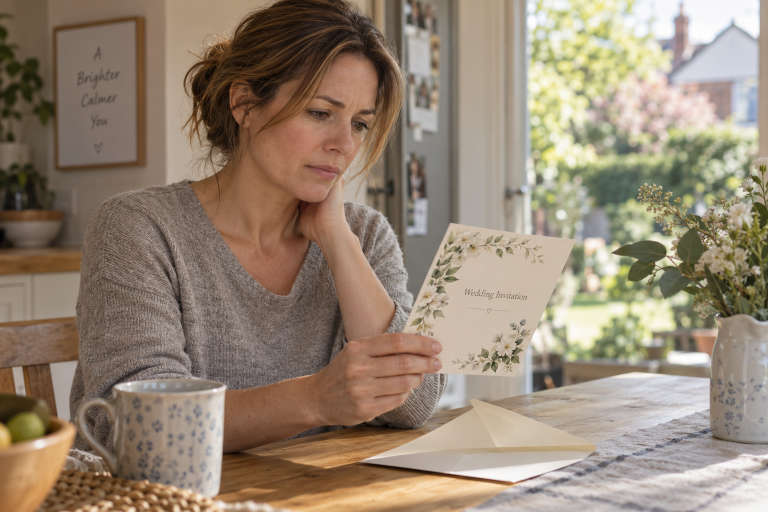
When I work with someone using hypnotherapy for panic attacks, I’m interested in both the frightening moments themselves and the way the possibility of another attack starts shaping everyday life. That’s central to my approach to hypnotherapy for anxiety, understanding what keeps you on edge and working towards feeling comfortable doing the things you miss.
Can hypnotherapy help with panic attacks?
Hypnotherapy can help some people work on the anxious responses surrounding panic. My approach combines hypnosis with practical therapeutic techniques, shaped around what happens to you.
That starts with a question: what is the most frightening part?
You might be afraid of collapsing. Perhaps you worry about being trapped somewhere, being unable to get help or having other people notice. You may struggle to explain it beyond, “I just need to get out.”
Those answers matter. Two people can describe similar sensations while being frightened of quite different things.
Together, we can work on the responses that have become associated with those situations, using imagination, mental rehearsal and practical changes. The aim is to help you feel more comfortable participating in life, with less time spent preparing for panic.
Why do panic attacks happen when nothing seems wrong?
You don’t have to be consciously worrying for panic to happen. Sometimes the physical sensation comes first, followed by the fear of what it means.
Your heart beats faster. You notice it. You wonder whether an attack is starting, and the fear adds to the sensation. Suddenly, something that began as a flicker has your full attention.
Panic can involve a racing heart, shaking, dizziness, breathlessness, nausea or a feeling of being disconnected from your surroundings. That helps explain why being told to “calm down” can feel so inadequate. You are experiencing something intensely physical.
New or unexplained symptoms need medical assessment. Severe chest pain or difficulty breathing needs urgent medical help rather than assuming it is panic.
Once symptoms have been assessed, we can explore your pattern without expecting you to arrive knowing exactly why it developed.
Why am I so frightened of another attack?
Perhaps the first attack happened on a train. Before that, a train was simply a way to get somewhere. Afterwards, you began noticing the closed doors, the distance between stations and the fact that you couldn’t leave whenever you wanted.
The journey has acquired a different meaning.
You might still travel, but only with someone. Only at quieter times. Only if you stand near the door.
I want to understand what those arrangements do for you. Which part feels reassuring? What do you imagine would happen without them?
There is no criticism in those questions. You have been trying to protect yourself from another frightening experience. Understanding that effort gives us a starting point for working towards greater freedom.
How can I stop being afraid of the sensations?
You may have already tried arguing with yourself.
“I know what this is. I’ve been through it before. Why am I still frightened?”
Understanding panic is useful, but understanding alone may not change how you feel when the sensations arrive.
In our work together, we can explore what you expect those sensations to lead to. We can then work towards a different response, rather than leaving you to repeat reassuring words that don’t feel convincing.
For example, the goal might be to notice a change in how you feel without immediately abandoning what you’re doing. That is something we can prepare for together, at a pace that feels workable.
I’m interested in helping you build confidence you can draw on outside the therapy room.
What can I do when I feel panic building?
If you recognise the sensations as your familiar, medically assessed panic symptoms, begin by making sure you are somewhere physically safe.
Try to let your breathing become gentle and steady, without forcing large breaths. You might place your feet on the floor and give your attention to something around you, the texture of the chair or the sound of someone’s voice.
Remind yourself that you have experienced this before and that the intensity can pass. You don’t have to solve the whole problem in that moment.
And you don’t need to turn a coping technique into another test. If counting breaths makes you monitor yourself more closely, tell me. We can explore what helps you without making every outing dependent on performing a routine perfectly.
What happens during hypnotherapy for panic attacks?
We begin with a conversation about your experience. I’ll want to know what happens before, during and after an attack, and what has become difficult between attacks.
We’ll also talk about what you want back.
Perhaps that is travelling independently. Staying through a meal. Going for a walk without calculating how quickly you could get home.
During hypnosis, we can use focused attention and imagination to explore different responses and mentally rehearse situations that currently feel difficult. Alongside this, we may work with beliefs, expectations and everyday habits that are relevant to your experience.
You remain involved. You can tell me when something doesn’t fit, ask questions or ask to pause. You don’t have to be good at relaxing before you come.
My broader approach is explained on my hypnotherapy for anxiety page.
What could feeling better look like?
Imagine accepting that invitation and then thinking about something else.
When the day arrives, you choose what to wear, leave the house and look forward to seeing someone. During the conversation, your attention is on what they’re telling you. You stay because you’re enjoying yourself.
That is a useful picture to bring into therapy.
So is something much smaller: finishing your shopping, walking a little further or feeling able to make a plan without immediately adding an escape clause.
We can use those details to give the work direction. They help us recognise progress in terms that matter to you.
How many sessions will I need?
There is no fixed number that fits every person. We’ll agree what you want to work towards and review what changes as we go.
My intention is to make the work useful from the beginning. That may involve gaining a clearer understanding of your panic, practising a different response or beginning to approach something you have avoided.
We’ll discuss what has helped and what still needs attention, rather than measuring progress only by how relaxed you feel during a session.
Can it help if I’ve had panic attacks for years?
Having struggled for years does not mean change is out of reach. Nor does an earlier experience of therapy tell us everything about what might help now.
I’ll want to hear what you tried, what made sense and where you felt stuck. You won’t need to arrive full of confidence that this will work. Doubts are something we can discuss honestly.
We start with the person you are now, and the life you would like to feel more comfortable living.
You don’t have to wait for another attack to ask for help
Perhaps the attacks are infrequent, but the anticipation is with you every day. That is worth talking about too.
At my practice in Tunbridge Wells, Kent, we can explore whether hypnotherapy for panic attacks is a suitable approach for you.
You can begin with something simple: “These are the things I want to feel able to do again.”
FAQs
Most panic attacks last between five and twenty minutes, although some last longer. When you’re in the middle of one, those minutes can feel endless. You may also feel unsettled afterwards, or experience another wave of panic. That doesn’t mean you’ve failed to calm yourself down. The most intense sensations can ease before you feel fully settled again.
A panic attack itself is not usually physically dangerous, even though it can feel overwhelming. A racing heart, dizziness or breathlessness can make you fear something terrible is happening. However, you cannot reliably distinguish panic from a medical problem just by reading a symptom list. New or unexplained symptoms need assessment. If you have severe chest pain, severe difficulty breathing or collapse, seek emergency help.
Yes. A panic attack can wake you from sleep with a racing heart and an intense feeling of fear, even without a nightmare. It can leave you reluctant to go back to sleep in case it happens again. If this is new or keeps happening, speak to your GP, as other conditions can also cause night-time waking and breathing difficulties. Once that has been checked, we can work on the fear that bedtime may have acquired.
Panic can be physically and emotionally demanding. Afterwards, you might feel drained, shaky or tearful, even when the strongest sensations have passed. Give yourself a little time to recover, perhaps somewhere quiet with some water. You don’t have to leap straight back into everything or criticise yourself for feeling tired. If exhaustion is persistent or unusual for you, have it checked rather than automatically putting it down to anxiety.
No. Some people have an isolated panic attack and never experience another. Panic disorder involves repeated, unexpected attacks together with ongoing worry or changes in behaviour because of them. The label needs a professional assessment. You can still seek help without that diagnosis, particularly if fear of another attack is starting to decide where you go and what you do.
Stay calm, speak gently and ask what would help. A simple “I’m here with you” can be more useful than repeatedly telling them to relax. Offer somewhere quieter and encourage gentle, steady breathing without pressuring them. Avoid crowding them or touching them without asking. If symptoms are new, severe or different from their usual attacks, seek medical help rather than assuming it is panic.